

Eye Examination
3. Examining the Eye
a. Let the Receptionist know about the dementia at the time you book your appointment.
b. Book your eye test at a time of day that suits you best.
c. You might want to invite your Carer or someone who knows you well to come with you to the test.
d. Let the Optometrist know how well you can answer questions or follow instructions.
OCT Scan & OPTOMAP Retinal Imaging
3D OCT Scan (Optical Coherence Tomography)
The health of your eye matters to you and it matters to us too which is why we are offering OCT to all of our patients.
Seeing beneath the surface of the eye is essential to the health of your eye .3D OC T screening can detect potentially serious conditions that can affect your eyesight and your overall health.
It uses light to image the different layers that make up the structures at the front and the back of the eye and captures a photograph and a cross sectional scan of the eye at the same time. This allows both instant and early diagnosis of a number of common ocular conditions. The scan is non invasive, painless, simple and quick. It can detect the most subtle changes to the retina with every eye test and give an invaluable ongoing record of the health and condition of your eyes. The common conditions identified through regular OCT screening include age related macular degeneration, diabetes, glaucoma, vitreous detachments, macular holes and more.
The recommendation is you have an OCT scan at every eye test with any future scans can be compared with previous ones for comparative diagnosis
Optomap ultra-widefield retinal imaging
Your eyes are a window to your health. The optomap ultra wide digital retinal imaging system helps us make informed decisions about your eye health and overall well beinghealth and overall being . Normally the optometrists examines the back of your eye through your pupil, this can be effective but difficult to perform and carried out manually without any digital record.The optomap ultra wide digital retinal imaging system captures more than 80% of your retina in one panoramic image. Traditional methods typically reveal only 10 to 15% of your retina at one time. This enhances our ability to detect even the earliest signs of disease that appear on your retina. Seeing most of the retina at once allows your optometrist more time to review your images and educate you about your eye health.
The recommendation is you have optomap retinal imaging every time you have an eye examination this will ensure you have a digital record of your retinal health on file which can be compared for changes overtime.The Optomap only takes a few seconds to perform and is not painful and typically does not require eye drops.
We recommend you combine both OCT & Optomap ultra wide field retinal imaging at every eye test – this is available for £49
Contact Lenses
-
They offer a level of liberation that does not exist for spectacle wearers .
-
They eliminate annoying visual distortions - peripheral blur, magnifying effects and give the wearer 'normal' vision.
- Contact lenses do not steam up, film over or become loose.
- They can provide a tremendous psychological boost to children and youngsters with 'strong' glasses.
- They can be worn for as little or long (within reason) and as frequently or infrequently, as you like.
- They are the ultimate visual correction for sports participation - removing the problem of glasses slipping or the risk of them falling off during active sport.
- Because they are invisible they do not signal to others that the wearer has a 'problem' with their vision.
- Many people actually see better in contact lenses than in their glasses they provide a more natural form of vision correction being directly on the eye.
-
Benefiting from an experienced and friendly team on the end of the phone or in person.
- If you loose/tear a monthly/daily contact lens we will endeavor to provide you with 2 FREE replacements in the year.
- Regular communication from the practice to let you know when your check ups are due and when lenses have arrived.
- 4 days of appointments during the week with early morning and early evening also available, including Saturdays.
- Although we'd love to see you, if you are too busy to call in we can arrange for home delivery (that's just from £1 a month extra)
- To keep you up to date with new products, were happy to supply a free trial of any lens we feel would be more comfortable for you - just ask.
How do I apply and remove my lenses?
Click the button below and scroll down to watch the video.
Myopia Management
What is Myopia?
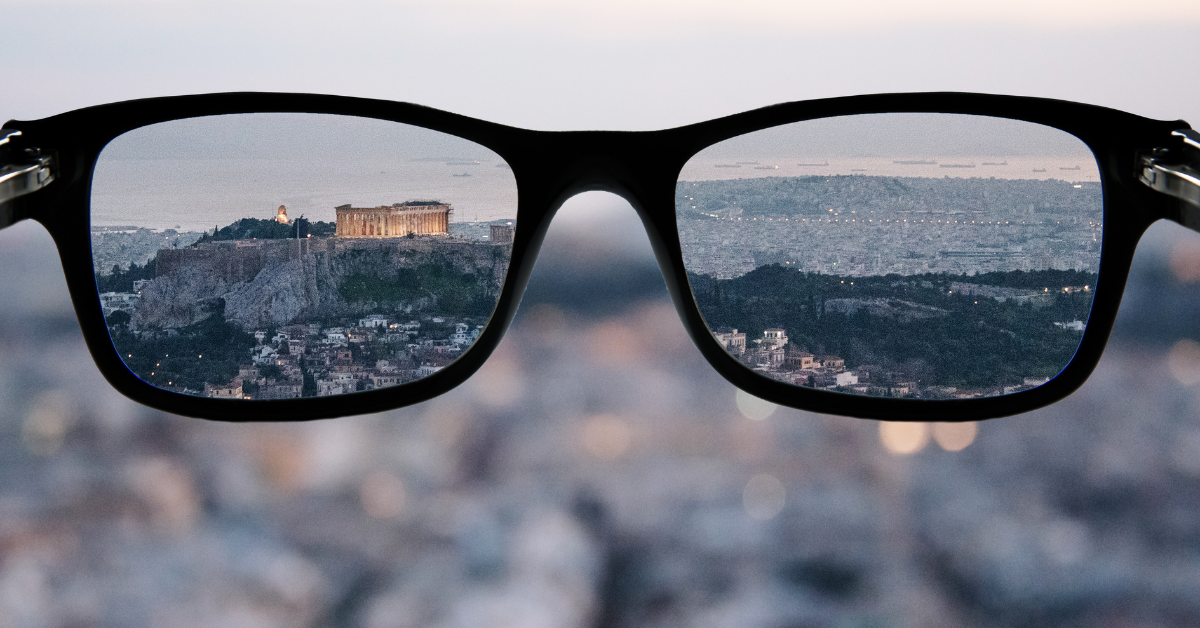
Myopia means short sightedness i.e. when the eyeball is too long and light entering the eye focus in front of the retina and objects at distance appear blurred.
Myopia is corrected by wearing glasses or contact lenses. As the child grows, their eyes grow and a person becomes more myopic so the power of their spectacles/contact lenses prescription increases.
A higher prescription is linked to an increased risk of developing eye diseases such as glaucoma, retinal detachments and myopic macula degeneration.
Risk factors for myopia
*myopic parents
*east Asian ethnic origin
*myopia before age 9
*limited outdoor time
*heavy engagement at near vision tasks
What is Myopia management?
Myopia management is the way to slow the progression of a child's short sightedness using specialised contact lenses or spectacle lenses along with lifestyle changes.
We can't stop myopia progression completely or guarantee the outcome but the aim is to slow the myopic progression.
Myopia management corrects the child's vision so that they can see well and slow the process of the eyeball growing so reducing how short sighted the child becomes.
The lens/contact lens gives clear vision through the centre and the periphery gives defocus to the peripheral retina to help reduce the eye growth.
Treatment Options:
1. No treatment – i.e. use standard plastic lens that do not slow down myopic progression.
Benefit – cost is covered by the NHS for children in full time education under the age of 19.
Problem – myopic progression can advance and the risk of developing eye diseases increases.
2. Spectacle lenses - the first spectacle lenses for myopic management became available in 2021.
Hoya Miyosmart lenses uses DIMS technology and Essilor Stellest lenses use HALT technology – we fit both brands
3. Contact lenses – there are 2 contact lens options
a) Daily disposable soft contact lenses e.g. Coopervision Misight contact lens which are to be worn a minimum of 6 days a week , 10 hours a day to be effective
b) Ortho-K lenses which are special gas permeable night lenses which are worn whilst the patient is asleep only. They temporarily and reversibly shape the cornea whilst you sleep so you can see during the day without correction
A top up for children/young people with more complex prescriptions that fall outside the available contact lens options may be required with spectacles worn over the contact lens to supply the missing astigmatism correction and provide improved visual acuity
4. Eye drops - Atropine is a prescription eye drop used to open the pupil and limit the ability to focus. This has been found to slow the progression of myopia.
It is not currently available in the UK.
What else can I do to help my child?
1. Regular breaks from intense screen/school work
2. Hold close tasks at 30 cm – no closer
3. 2 hours a day outside (not on a screen!) – this includes walking to/from school, break time/lunch times outside, PE lessons
4. Have an annual sight test for your child from the age of 2 allowing any signs of myopia to be picked up.
When can we stop myopia management?
The thoughts are that when the eye is likely to stop growing, which is about age 24/25 & all studies have finished.
How much does it cost?
Myopia management is currently not funded on the NHS -please ring the practice on 0114 2621955/ email reception@victoriasmithopticians.co.uk for full details.
Further reading
https://mtkidsvision.org/
www.aop.org.uk/myopiamanagement
Kids Zone
Visual Stress Testing
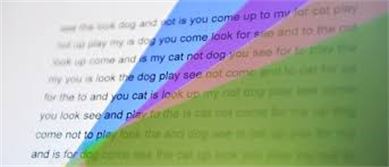
Visual stress is influenced by many factors not least the visual system. Problems such as incorrect focusing of the eye, poor muscle co-ordination or insufficient muscle strength all have an influence. It is important to have an eye examination to eliminate these potential causes.
Dry Eye Clinic
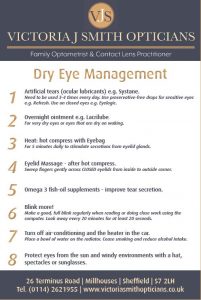
If you are suffering with itchy, gritty, sore, dry but watery eyes, you may be suffering with dry eyes. Why not make an appointment in our dry eye clinic for Victoria to assess and help to resolve the problem.
We will begin with history and symptoms, risk factor analysis, non-invasive then invasive tests.
From this we can classify the type of dry eye you have and produce a management plan to help resolve and manage the symptoms.
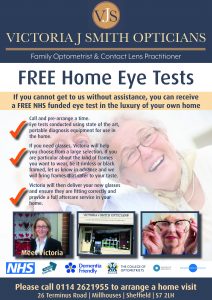
Home Tests
E-scoop lenses for Macular Degeneration
New E-Scoop lens can improve vision for people with Macular Degeneration
Age-Related Macular Degeneration (AMD) is the leading cause of sight loss in the UK. It affects the central vision and can make seeing fine detail like reading very difficult or impossible. The advent of a new spectacle lens called E-scoop has offered hope for those whose sight has deteriorated through this condition (or other macular diseases). The new lenses look like no other spectacle lens. The unique curve, thickness, prism, colour and coating could improve your vision significantly.
The lenses can give you:
Partial recovery of your central vision
Reduction of your sensitivity to light and glare
Better recognition of details
Improved contrast
Improved depth perception
It is very simple to try the new lenses - we have a set of lenses you can try over the top of your prescription spectacles (you need to have a current up-to-date pair of spectacles) - If you get the "WOW" factor - they work. They really can improve your vision significantly, and we have had many clients like you who have found these to be a massive benefit. If the trial clip-on works, we can then make the lenses to your prescription, further improving the sight that you achieve.
So how do they work?
The lens thickness and curve magnifies the vision.
We displace the image your eye sees onto a part of your macula that is healthier and therefore has a higher quality of vision than the damaged macula.
Research has shown that the lower part of your macula suffers the most damage, so we shift the image upwards to a healthier part of your macula.
The special colour of the lenses provides you with more contrast and a reduction of sensitivity to light.
We reduce reflections with a high-quality anti-reflection coating.
Are these eccentric viewing spectacles?
No - Macular degeneration normally damages the inferior part of your macula and these new lenses shift the image to a healthier part. The image is always kept within the macular area. Most of our clients are looking for the best image quality, with these spectacles this process is repeatable and provides a restful view of the image.
How long does it take to get used to your new lenses?
Adaptation time is very quick; you should immediately experience a "WOW' factor.
Who can benefit from theses lenses?
These are primarily developed for you if you have macular degeneration. You can find the beneficial effects of these new lenses at every stage of macular degeneration.
What do I do next?
Call 0114 2621955 to book an appointment to come and see the lenses and try them out. Bring your up to date spectacles and prescription. Please bring any reading material or objects you are struggling to see so you can test for an improvement. If your glasses are not very recent we recommend booking an eye examination with us at the same time. E-scoop lenses work best when the prescription is as accurate as possible.

Emergency Eye Care
During Opening Hours:
Please call the practice on 0114 2621955 for an emergency eye appointment (PEARS Appointment). You do not need to be one of our patients.
We are a member of the PEARS Scheme (Primary Eyecare Acute Referral Scheme) which helps patients as they find this service more convenient, closer to home, we have longer opening hours and have weekend appointments. If you need a follow up, there is also consistency of care.
We have been sourced by The Local Optical Committee, and have been externally training and accredited and satisfied the required experience, skills and equipment criteria.
If you are 16yrs or over and having an eye emergency, please attend The Emergency Eye Centre at The Royal Hallamshire Hospital, Broomhill, Sheffield, S10 2RX. Mon-Fri, 8.30am-4pm (excluding bank holidays).
If you are under 16yrs and having an eye emergency, please attend Sheffield Children's Hospital, Western Bank, Sheffield, S10 2TU. Open 24hrs a day/365 days a year.
Out of Hours:
Please attend A&E at The Northern General Hospital, Herries Road, Sheffield, S5 7AU. Tel. 0114 2434343.
